Bmaj7 Chord — Piano
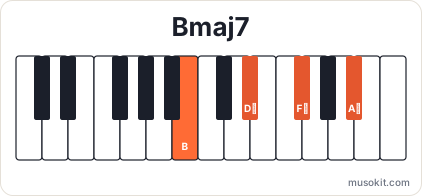
B major 7th (B — D♯ — F♯ — A♯). The major 7th chord stacks a major seventh onto the major triad, giving a lush, sophisticated sound central to jazz and neo-soul.
Notes in the B major 7th chord
The B major 7th chord contains B — D♯ — F♯ — A♯. The major 7th chord stacks a major seventh onto the major triad, giving a lush, sophisticated sound central to jazz and neo-soul.
Bmaj7 on the keyboard
Bmaj7 inversions
An inversion uses the same notes with a different note at the bottom. Pianists use inversions to move between chords with less jumping around the keyboard.
| Position | Notes, low to high | Bass |
|---|---|---|
| Root position | B – D♯ – F♯ – A♯ | Root in the bass |
| 1st inversion | D♯ – F♯ – A♯ – B | D♯ in the bass |
| 2nd inversion | F♯ – A♯ – B – D♯ | F♯ in the bass |
| 3rd inversion | A♯ – B – D♯ – F♯ | A♯ in the bass |
Suggested fingering
These are the most common classical fingerings. Adjust based on the musical context and what comes before and after the chord.
Finger numbers: 1 = thumb, 2 = index, 3 = middle, 4 = ring, 5 = little finger. For both hands, start with the thumb on the root note unless an inversion is specified.
How to play B major 7th on piano
Place your right hand thumb (finger 1) on B. Find the remaining chord tones — B — D♯ — F♯ — A♯ — using the keyboard diagram above as a guide. Press all three (or four) keys simultaneously for a block chord, or roll them from bottom to top for an arpeggiated voicing. The highlighted keys in the diagram show exactly where each note sits on the keyboard.
Practise the chord in both hands separately before combining them. The left hand typically plays the chord an octave lower than the right hand. Once comfortable, try inverting the chord — putting the third or fifth in the bass — to create smoother voice leading between chords.
Use the MusoKit chord finder
The interactive chord finder lets you see B major 7th — and any other chord — on piano, guitar, and ukulele at once, with audio playback of every voicing.
Open Bmaj7 in the chord finder →FAQs
What are the notes in the B major 7th chord?
The B major 7th chord contains B — D♯ — F♯ — A♯. The root note is B, and the remaining tones are built by stacking intervals of 4, 7, 11 semitones above the root.
How many notes does a major 7th chord have?
A major 7th chord has 4 notes. This is an extended chord — it adds a seventh above the basic triad.
Is Bmaj7 the same in every octave?
The notes (B — D♯ — F♯ — A♯) are always the same, but you can play them in any octave or inversion. Playing the chord with the third or fifth in the bass instead of the root creates a different voicing — the notes are the same, just rearranged.
How do I find Bmaj7 in different positions on the piano?
The pattern of intervals (semitones between notes) is always [0, 4, 7, 11]. Once you know that, you can build this chord starting on any key. The MusoKit chord finder shows all standard voicings.