Whether you're writing a song, learning the key, or looking for inspiration, C Minor is a rich harmonic landscape. Here are the building blocks and the progressions most used by songwriters in this key.
The 7 Diatonic Chords in C Minor
| Numeral | Chord | Quality |
|---|---|---|
| i | Cm | minor |
| ii° | Ddim | diminished |
| III | Eb | major |
| iv | Fm | minor |
| v | Gm | minor |
| VI | Ab | major |
| VII | Bb | major |
Guitar shapes for every chord in C minor
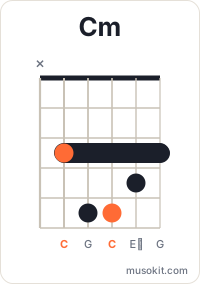
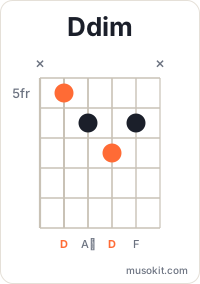
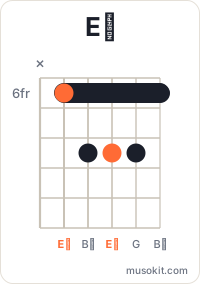
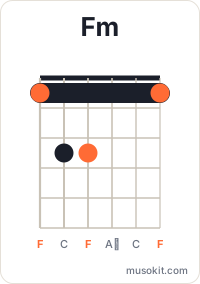
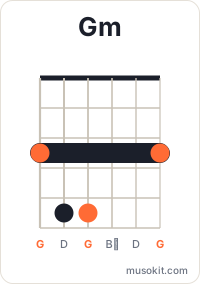
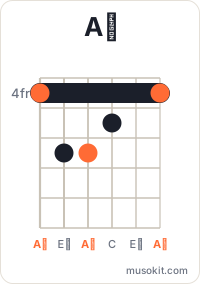
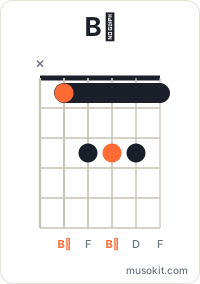
Capo tip: in this key Cm, Fm, Gm and A♭ are barre chords. Put a capo on fret 3 and play Am Dm Em F instead (only F still needs a small barre): it sounds exactly the same. Try it in the capo calculator.
4 Essential C Minor Progressions
Hear These Progressions Instantly
The MusoKit Chord Progression Generator plays any progression in C — no instrument needed.
Open free generator →Frequently Asked Questions
What are the chords in C Minor?
The seven diatonic chords are: i (Cm), ii° (Ddim), III (Eb), iv (Fm), v (Gm), VI (Ab), VII (Bb).
What is the most popular C Minor chord progression?
The most popular is Cm – Bb – Ab – Bb (i–VII–VI–VII) — used in countless songs across pop, rock, and folk.
How do I practise chord progressions in C Minor?
Start with I–IV–V in C Minor, then try I–V–vi–IV. Use the MusoKit generator to hear each progression first so you know your target.
What is the tonic chord of C Minor?
The tonic chord is Cm — the home chord of the key that progressions typically start and resolve to.
See also: Pop Progressions · Jazz Progressions · Chord Progression Generator