Chord Progressions · D Major
Chord Progressions in D Major
The diatonic chords in D Major, the most useful progressions, and how to use them — with Roman numeral analysis and links to the interactive generator.
All chords in D Major
These seven chords are built from the notes of the D Major scale. Any progression that uses only these chords will sound naturally "in key".
DEmF#mGABmC#°
Guitar shapes for every chord in D major
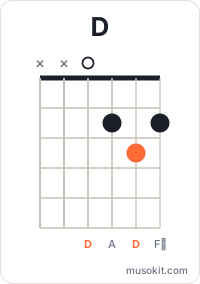
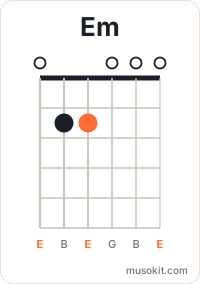
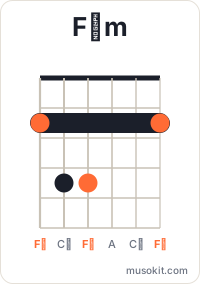
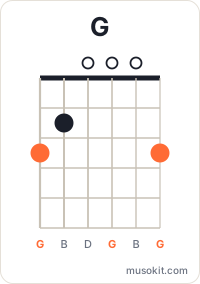
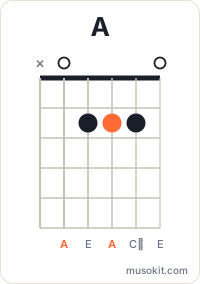
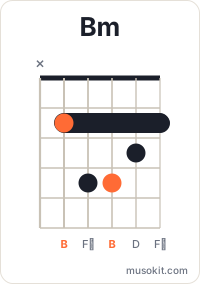
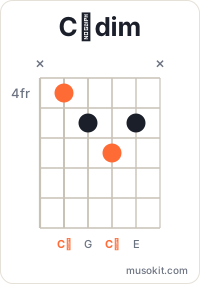
Capo tip: in this key Bm is a barre chord. Put a capo on fret 7 and play G C D Em instead: it sounds exactly the same. Try it in the capo calculator.
The most useful progressions in D Major
I–V–vi–IV
D – A – Bm – G
I – V – vi – IV
The most popular pop progression in this key.
I–IV–V–I
D – G – A – D
I – IV – V – I
Classic folk and rock cadence.
I–vi–IV–V
D – Bm – G – A
I – vi – IV – V
The 50s/60s pop progression.
ii–V–I (Jazz)
Em7 – A7 – Dmaj7
ii – V – I
Foundation of jazz harmony.
Use the chord progression generator to hear any of these in your browser and explore other keys and styles.
Open Chord Progression Generator →Common questions
What are the chords in D Major?
The seven diatonic chords in D Major are: D, Em, F#m, G, A, Bm, C#°. The most commonly used are D, G, A, Bm. These four chords alone can harmonise the majority of pop and folk songs in this key.
What is the most popular chord progression in D Major?
The most popular progression in D Major is D – A – Bm – G — the I–V–vi–IV pattern. It appears in hundreds of pop songs and works in this key with a natural, satisfying feel. The chords are all diatonic (in-key) and cycle smoothly without resolution.
How do I transpose these progressions to another key?
The Roman numerals (I, IV, V, vi, etc.) are the same in every major key — only the letter names change. If you know the I–V–vi–IV pattern in D Major, you can instantly play it in any other key by finding that key's I, V, vi, and IV chords. Use the MusoKit chord progression generator to hear any progression transposed to any key.