Music Theory · 2026-05-22
Blues Chord Progressions
The blues is arguably the most influential harmonic system in Western music. Nearly all rock, jazz, country, and soul draws from it. The 12-bar form has been recorded hundreds of thousands of times — yet it never gets old, because the emotion lives in the playing, not the chords.
Blues chord progressions are built on three dominant 7th chords: the I7 (tonic), IV7 (subdominant), and V7 (dominant). The standard 12-bar blues follows the pattern I7–I7–I7–I7–IV7–IV7–I7–I7–V7–IV7–I7–V7. This form is the foundation of rock, soul, country, and jazz — all three chords played as dominant 7ths gives the blues its characteristic tension and gritty sound.
In C:
In G:
Heard in: "Johnny B. Goode" (Chuck Berry), "Sweet Home Chicago", "Pride and Joy" (SRV)
Every chord is a dominant 7th — including the I chord, which in a major key would normally be a major 7th. This constant unresolved tension is the blues sound. The I7 to IV7 move (bars 5–6) is the most characteristic moment in the form.
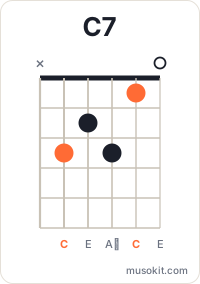
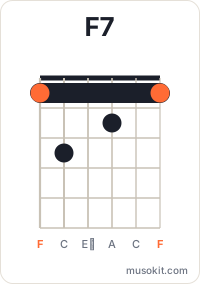
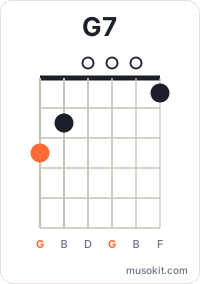
In C:
In G:
Heard in: Robert Johnson, Muddy Waters, many Chicago blues recordings
Moves to IV7 in bar 2 (instead of staying on I7). The quick movement creates more harmonic activity in the first four bars, giving the soloist more to respond to.
In C:
In G:
Heard in: "The Thrill Is Gone" (B.B. King), "Mr. P.C." (John Coltrane)
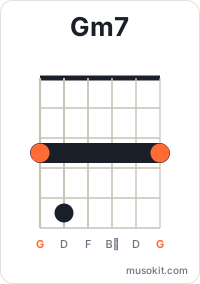
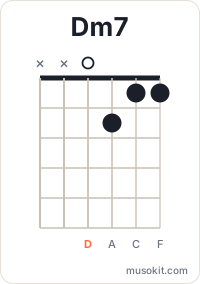
Replaces the dominant 7th chords with minor 7ths on the I and IV, but keeps the dominant V chord for the turnaround tension. The minor quality creates a darker, more melancholic feel.
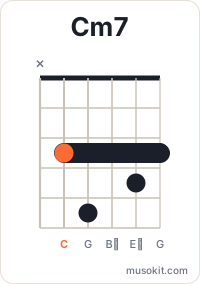
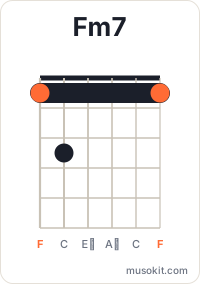
In C:
In G:
Heard in: Charlie Parker's blues, "Billie's Bounce", "Au Privave"
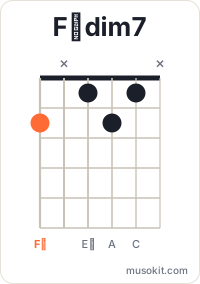
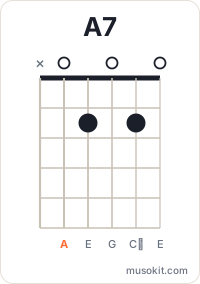
Adds jazz substitutions and passing chords to the 12-bar form — secondary dominants, diminished passing chords, and turnaround ii–V–Is. This is the blues filtered through bebop vocabulary.
Want to hear these progressions in any key? The MusoKit chord progression generator plays them back instantly.
Try the Chord Progression Generator →