The Lydian mode is the 4th mode of the major scale. Starting on F, its notes are F – G – A – B – C – D – E, following the interval pattern W–W–W–H–W–W–H. It is a major mode with a raised 4th (♯4), which gives it a dreamy, ethereal, floating quality. It is used in film scores, prog rock, and any music that wants to sound magical or otherworldly.
The Lydian Mode is the 4th mode of the major scale — a distinct scale with its own unique character, built by starting on the 4th note of any major scale. Here's everything you need to know about how it sounds, where it's used, and how to play it.
Notes in the Lydian Mode (starting on F)
Intervals: W–W–W–H–W–W–H
Formula: 1 2 3 #4 5 6 7
Lydian mode on F on piano and guitar
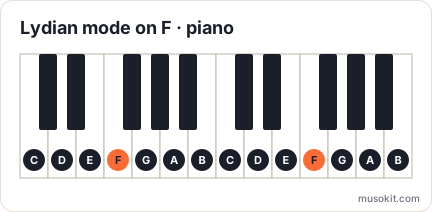
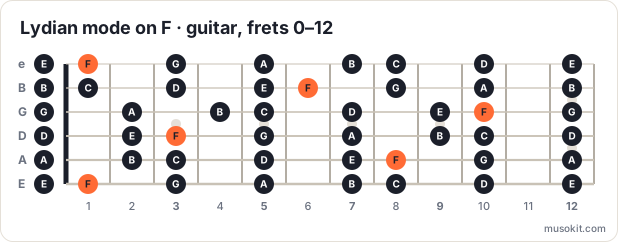
On guitar, the root F sits at fret 1 on the low E string and fret 8 on the A string. Start there, play every marked note up to the next F, and you have played the whole scale.
Scale degrees of Lydian mode on F
| Degree | Note | Interval from F |
|---|---|---|
| 1 | F | Root |
| 2 | G | Major 2nd |
| 3 | A | Major 3rd |
| ♯4 | B | Augmented 4th |
| 5 | C | Perfect 5th |
| 6 | D | Major 6th |
| 7 | E | Major 7th |
Character & Sound
Dreamy, bright, and otherworldly. The #4 (raised 4th, also called the augmented fourth or tritone) gives Lydian its floating, ethereal quality — it sounds like major but slightly unresolved.
Lydian is major (Ionian) with a raised 4th. Standard major has a perfect 4th (5 semitones from root) — Lydian raises it to an augmented 4th (6 semitones), creating that dreamy, unresolved brightness.
Film scores (John Williams uses Lydian constantly for wonder and adventure), prog rock, jazz. Any music that wants to sound magical, optimistic, or 'lifted' uses Lydian.
John Williams film scores (Indiana Jones, E.T.), Joe Satriani 'Flying in a Blue Dream', The Simpsons theme
How to Build Any Lydian Mode
The Lydian Mode is the scale you get when you start on the 4th note of any major scale and play all the same notes to the next octave. For example:
- C major scale: C D E F G A B → start on F → gives you F Lydian (F – G – A – B – C – D – E)
- You can build a Lydian Mode starting on any note by applying the formula: 1 2 3 #4 5 6 7
Explore Every Mode with Audio
The MusoKit Scale Explorer lets you see and hear every mode in any key — guitar, piano, and bass.
Open Scale Explorer →Frequently Asked Questions
What is the Lydian Mode?
The Lydian Mode is the 4th mode of the major scale — built by starting on the 4th degree and using the same notes as the parent major scale. Starting on F: F – G – A – B – C – D – E.
What is the difference between Lydian Mode and the major scale?
Lydian is major (Ionian) with a raised 4th. Standard major has a perfect 4th (5 semitones from root) — Lydian raises it to an augmented 4th (6 semitones), creating that dreamy, unresolved brightness.
What music uses the Lydian Mode?
Film scores (John Williams uses Lydian constantly for wonder and adventure), prog rock, jazz. Any music that wants to sound magical, optimistic, or 'lifted' uses Lydian.
Is Lydian Mode major or minor?
Lydian is a major mode — its tonic chord is major. It sounds brighter than standard major due to the raised 4th, giving it a dreamlike, elevated quality.
How do I practise the Lydian Mode?
Learn the notes starting on F (F – G – A – B – C – D – E), then play over a backing track using that root chord. Use the MusoKit Scale Explorer to see finger positions on guitar and piano.
See also: Scale Explorer · All 7 Modes Explained · Circle of Fifths